The Colonizer vs. The Colonized: Frantz Fanon, The Battle of Algiers, and the Silenced Revolution of Haiti

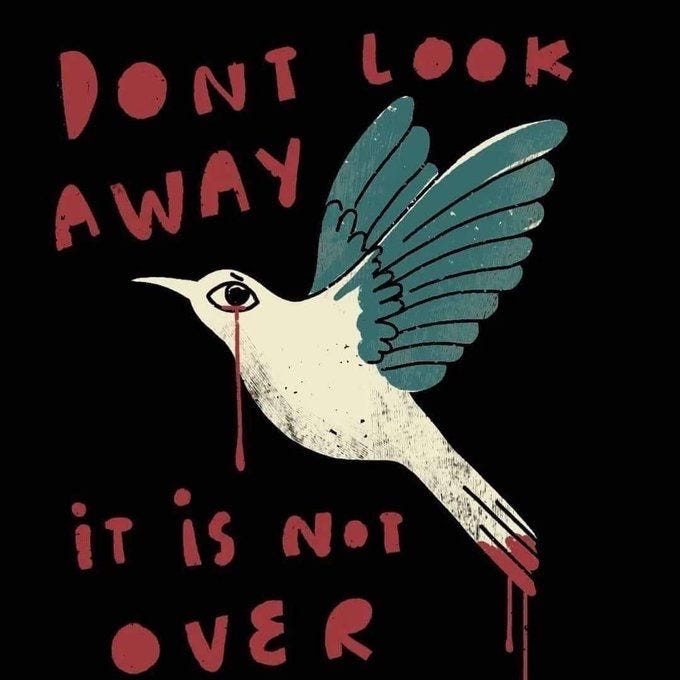
The foundation of colonialism discourse lies in the power dynamics between the colonizer and the colonized, the individual ideas discussed in this paper offer nuanced perspectives on this relationship through their works. Through their literary and cinematic works, these authors and filmmakers provide insightful analysis on the complex power dynamics between the colonizer and the colonized, shedding light on the lasting impact of colonialism on different historical settings and the ways in which it continues to shape our understanding of race, identity, and power today. By examining their portrayals of historical settings, we can gain a deeper understanding of the lasting impacts of colonialism on both the colonizer and the colonized.
Colonialism teaches the colonized that they are inferior, reinforcing this belief through the imposition of cultural, economic, and political systems that favor the colonizer and perpetuate inequalities of the colonized. The white man has established a sense of superiority that has fed into the upbringing of colonialism, that has resulted in the internalization of inferiority by the colonized, leading to a loss of cultural identity and a struggle for self-determination. Inferiority within the marginalized starts with being reduced to one's race. One does not naturally feel inferior, racism establishes the dismantled view on the colonized, allowing white superiority gaining societal advantages. Power is then internalized by race, perpetuating the inferiority and hierarchical complexes of either group. Frantz Fanon analyzes psychological effects of these elements on the colonized, evidently depicting the colonizer's part in establishing their hierarchy: "The feeling of inferiority of the colonized is the correlative to the European’s feeling of superiority. Let us have the courage to say it outright: It is the racist who creates his inferior." The internalization of this inferiority makes the colonized view themselves as such, leading to a loss of self-esteem and a sense of inadequacy. This psychological damage perpetuates the cycle of colonization and reinforces the power dynamic between the colonizer and the colonized.
The dehumanizing effects of colonialism that specifically affects the colonized psychologically triggers a cycle in which the colonizers will continue to have control as long as they are able to maintain the psychological trauma and inferiority complex in the colonized population. This is why decolonization efforts must address not only political and economic systems, but also the psychological impacts of colonization: "Because it is a systematized negation of the other, a frenzied determination to dent the other any attribute of humanity, colonialism forces the colonized to constantly ask the question: "Who am I in reality?" The inability to understand the true indifference between the colonized and colonizer derives from the constant dehumanizing and pressuring of self-doubt forced upon the colonized.
Language, culture and economics are all tools of colonization that perpetuate the power dynamic between the colonized and colonizer, making it difficult for the colonized to break free from their subjugation. Fanon describes the economic structure as a factor in psychologically enacting the idea of never being equal to the superior: "-the economic substructure is also a superstructure. The cause is the consequence; you are rich because you are white, you are white because you are rich." In essence, race and the economic system are intertwined, colonialism and capitalism work together to maintain a power dynamic that benefits the ruling class and oppresses the colonized people.
In 'Black Skin White Masks', Fanon describes European culture having "-forced an existential deviation on the Negro. I shall demonstrate elsewhere that "what is often called the black soul is a white man’s artifact." This symbolism of objectifying the black man creates a sense of inferiority and dehumanization, leading to a cycle of violence and oppression. Fanon argues that the only way to break this cycle is through a revolution that dismantles the system of colonialism and allows for the rehumanization of any colonized man. Decolonization will always be a violent process, one that allows the colonized to reassert their liberation from the colonial power: "National liberation, national renaissance, the restoration of nationhood to the people commonwealth: whatever may be the headings used or the new formulas introduced decolonization is always a violent phenomenon."
As Algeria became a colony of France, French citizens better known as "les pieds-noirs", migrated to this country, making Algerians second-hand citizens of their own land due to the colonizers being granted the benefit of having superior rights. Les pieds-noirs were able to pilfer the lands of the native Algerians and overall treated them very immorally in society. These affairs are illustrated in Italian filmmaker Gillo Pontecorvo’s 1966 film "The Battle of Algiers." The Battle of Algiers depicts a vivid portrayal of the struggle for independence, showing the efforts of Algerians and the FLN with their revolt against the French in urban-guerilla warfare style. The film shows the difficulties of the struggle of decolonization, highlighting the strives of the brutal tactics the Algerians had to take on to continue their fight against occupation: "You know Ali, it’s hard to start a revolution, Even harder to continue it. And hardest of all to win it. But it’s only afterwards, when we have won, that the true difficulties begin."The Battle of Algiers also sheds light on the French military's use of torture and oppression to maintain control over Algeria, which led to international condemnation and ultimately contributed to the country's independence. The film remains a powerful reminder of the human cost of colonialism and the importance of self-determination in shaping a nation's future.
History is written by the victors and it is important to critically examine the narratives that have been passed down to us in order to gain a deeper understanding of the impact of colonialism on individuals and societies. In his book, 'Silencing the Past,' Michel Trouillot highlights the West's failure of highlighting the Haitian Revolution, and the improbable slave uprising that led to an independent state where the colonized overthrew the colonizer. Trouillot argues that the absence of the Haitian Revolution in Western historical narratives is not accidental, but rather a deliberate act of silencing and erasure, as it challenges the dominant narrative of European superiority and justifies the need for colonialism. He emphasizes the importance of including marginalized voices and histories in our understanding of the past. Before the revolution,Trouillot described the Haitian societal structure as "the place of blacks now guaranteed at the bottom of the Western nomenclature, anti-black racism soon became the central element of planter ideology in the Caribbean,"allowing race to be the mode of control for colonizers, abusing their power to practice slavery and benefit off the exploitation of the Haitian population.
No matter the setting, or the targeted group of people, the use of racism as a tool for oppression and control has been a recurring theme throughout history, perpetuating systemic inequalities and injustices that continue to affect marginalized communities today. We see a reoccuring theme of white superiority being the basis of control over others- the colonies establishing a sense of dominance over other groups based on their deeply rooted and historical economic and social advantages that allow them to continue that discourse. This has resulted in the marginalization and exploitation of indigenous communities, the preservation of their rights being extraneous. It is important to acknowledge and address the systemic oppression that has been perpetuated by these power dynamics, and work towards dismantling them in order to create a more equitable society. This can be done through education, advocacy, and amplifying the voices of marginalized communities just the way the works of intellectuals mentioned in this paper continue to do with their work.
Fanon, Frantz, Cornel West, Richard Philcox, Jean-Paul Sartre, and Homi K. Bhabha. The Wretched of the Earth. New York: Grove Press, 2021.
Julien, Isaac, Frantz Fanon, Mark Nash, and Colin Salmon. Frantz Fanon, Black Skin, White Mask. London: British Film Institute, 2017.
Musu, Antonio, Yacef Saadi, Franco Solinas, and Gillo Pontecorvo. The Battle of Algiers, n.d.
Trouillot, Michel-Rolph. Silencing the Past: Power and the Production of History. Boston, MA: Beacon Press, 2015.
This is a really interesting deep dive. I’ve been reading more Fanon as a way into black existentialism, which goes beyond the traditional tenets of the philosophy to speak to how one defines meaning from within an oppressed group. Hoping to write something on that soon but here is my latest post on the basics of existentialism if you’re interested in that kind of thing! https://substack.com/@megevelene/note/p-167484097?r=58674&utm_medium=ios&utm_source=notes-share-action
Do you think, kati, that we are now witnessing the end of the colonization era, including the Sykes Picot system?